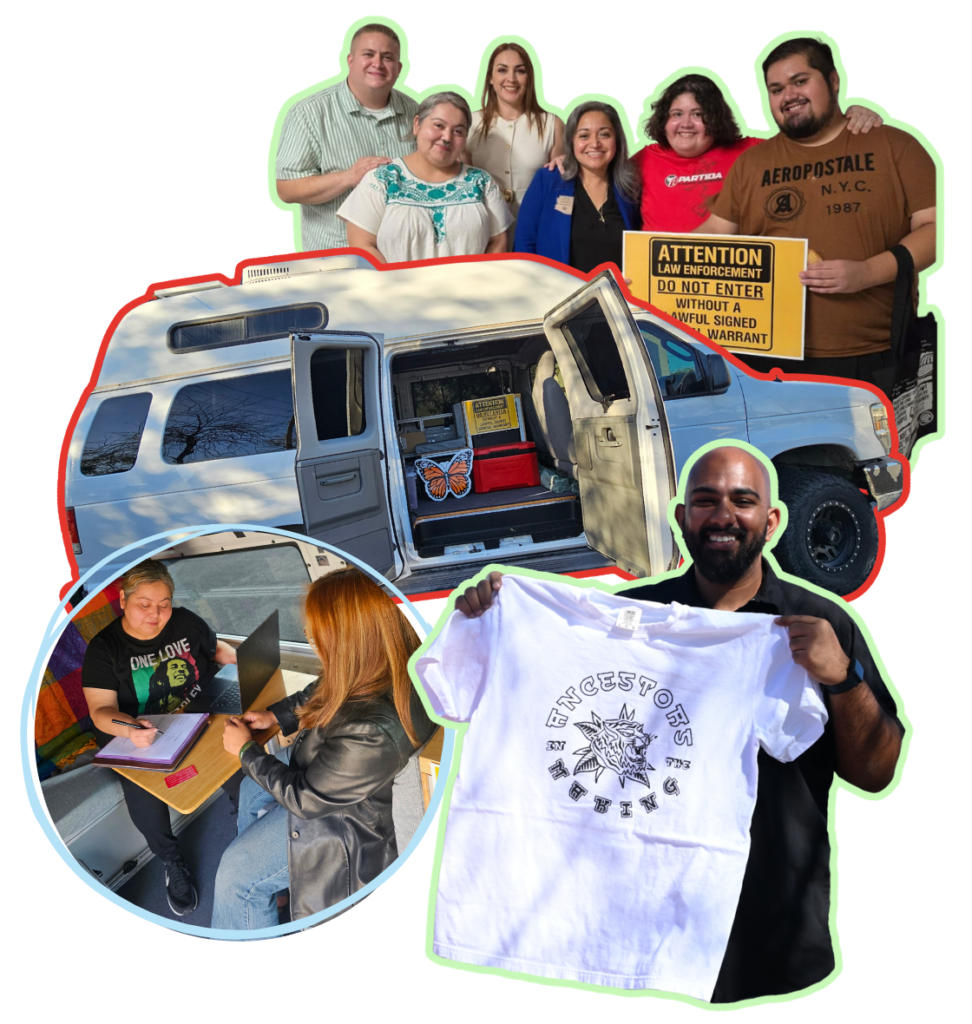
Webuildyear-round community powerbeyond an election cycle, striving to make sure our communities’ voices are heard and considered in every level of the decision making process. Our work includes Voter Registration, Get Out the Vote, Election Protection, and Democracy Defense.
2026 Election Resources
1.3 million eligible Arizonan voters aren’t registered to vote. Many of them are young and Asian American, Pacific Islander, Latinx, African American, or Native American. Let’s register to vote and make a difference!
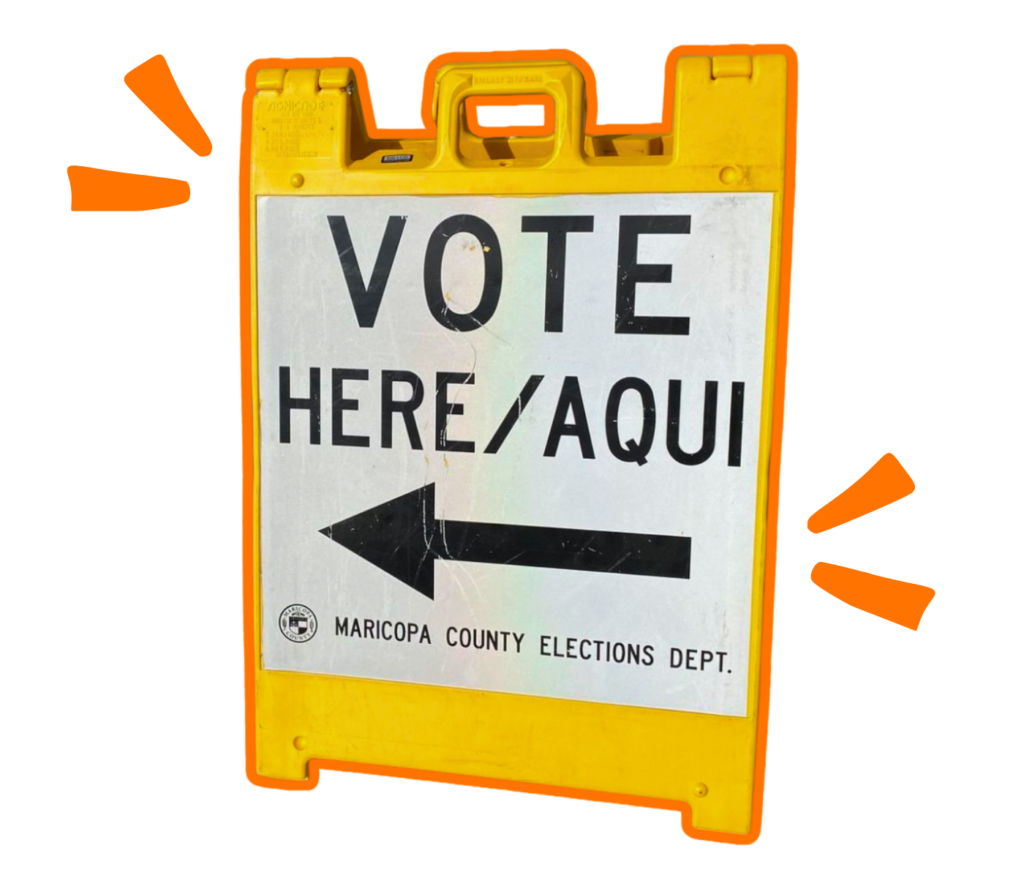
Whether you have questions about registering to vote, wondering who’s on the ballot or want to find a polling location nearest you — We got you covered!
Follow our voter checklist below to ensure you are informed and prepared this election season:
Check Your Voter Eligibility
To vote in Arizona, you must be a citizen of the United States and a resident of an Arizona county. A voter must be 18 years or older on or before Election Day.
Individuals must provide proof of citizenship when registering if they wish to vote in state and local elections.
To be eligible to vote in an election one must register at least 29 days prior to the election. Individuals can register online, in person at the county recorder’s office, or by mail.
By voting down the ballot, we can build a more representative system for all Arizonans!
Need help restoring your right to vote? Did you run into any issues while voting?
Our Legal Clinic can help! We offer FREE services to our AANHPI and migrant community members in need. Call our Legal Clinic at 480-277-6467 or click the button below learn more.
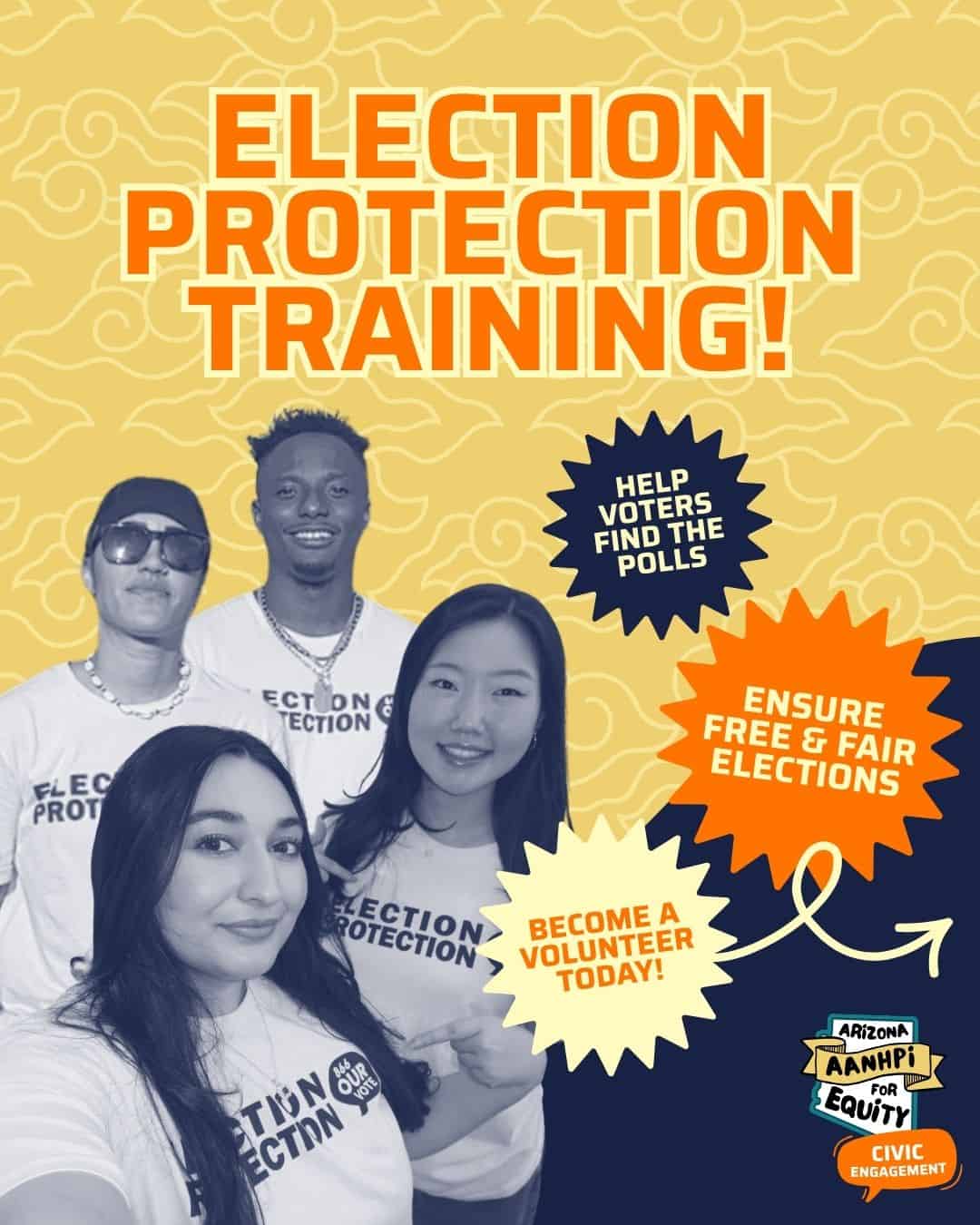
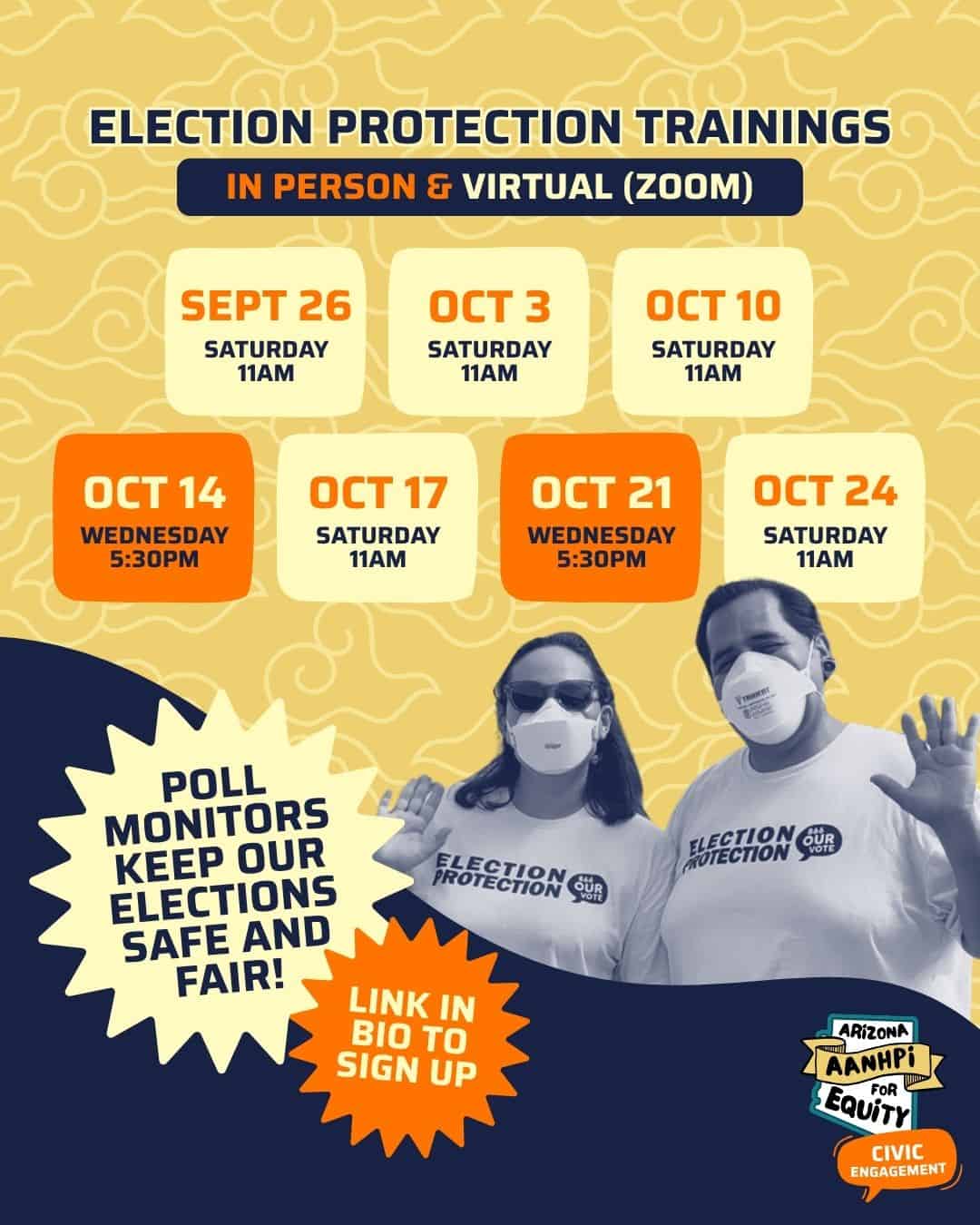
We want to ensure ALL voters feel safe going to the polls and are assured of the safety of the voting process. We will have Election Protection (EP) volunteer opportunities for community members to help protect the vote across Tempe, Mesa, Chandler, and Tucson. Click below to sign up for an Election Protection training!
Weigh in on bills from the comfort of your couch! Arizona’s Request to Speak (RTS) is an online tool that lets everyday citizens give Arizona state lawmakers our feedback on bills.
It’s an easy way to get involved in state politics, stay informed on the bills that directly affect us, and make sure our elected officials honor the wishes of us, their constituents.
In order to create a Request to Speak account, you must register AT THE CAPITOL on the kiosks in their lobby. Once you register your account, you can rate and comment on bills or sign up to testify at the hearing.
Text messaging originator opt-in data and consent information will not be shared with any third parties, provided that the foregoing does not apply to sharing (1) with vendors, consultants and other service providers who need access to such information to carry out work on our behalf (and who will not use such information for their own purposes); (2) if we believe disclosure is required by any applicable law, rule, or regulation or to comply with law enforcement or legal process.